3D Laser Scanner Training for Law Enforcement and Forensic Investigators
Practical 3D scanning instruction for crime scene investigators, crash reconstructionists, forensic personnel, and public safety agencies. Training can cover scanner operation, scene acquisition, point cloud processing, forensic mapping, visualization, and the integration of 3D data into investigative and courtroom workflows.
What Is 3D Laser Scanner Training for Law Enforcement?
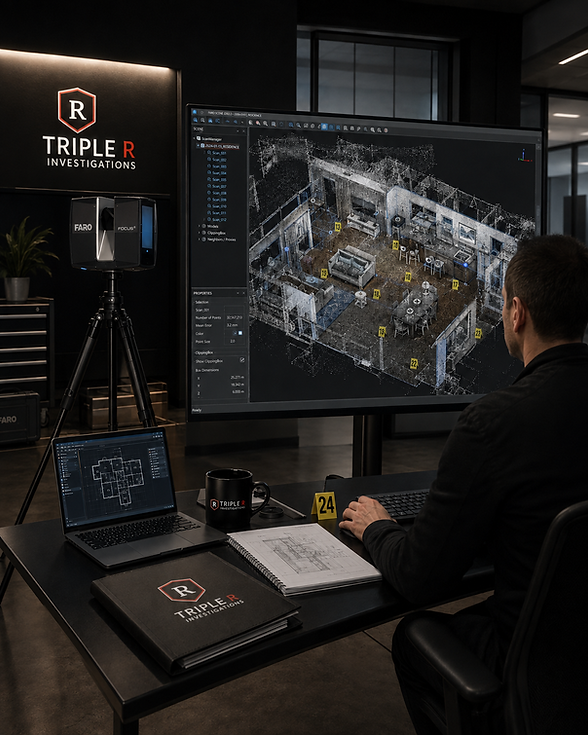
3D laser scanner training teaches investigators how to systematically document physical environments using terrestrial laser scanning and related spatial imaging technologies. Rather than relying exclusively on individual photographs and manual measurements, investigators can capture millions of spatial measurements that preserve the geometry and relationships within a scene.
01.
Preserve Scene Geometry
Capture spatial relationships, distances, elevations, and object positions before the scene changes.
02.
Document Complex Scenes
Record large or complicated crime and crash scenes more comprehensively than isolated measurements alone.
03.
Measure After the Scene Is Gone
Return to the captured dataset to evaluate dimensions, locations, and relationships without physically revisiting the scene.
04.
Support Analysis and Presentation
Convert 3D data into measurements, diagrams, point cloud views, and forensic visualizations for reports and court.


Who Is This Training For?

Law Enforcement
Crime scene units
Patrol evidence technicians
Detectives
Major crime teams
Officer involved shooting teams

Crash Investigation
Traffic units
Crash reconstruction teams
Fatality investigators
Commercial vehicle investigation teams

Fire and Forensic Personnel
Fire investigators
Arson investigators
Forensic technicians
Medical or death investigation personnel where appropriate

Specialized Public Safety Teams
Major incident teams
School safety personnel involved in facility documentation
Emergency planning and facility documentation teams
From Scanner Operation to Forensic Workflow
Scene Assessment and Scan Planning
Where should the scanner be positioned? What objects can create shadowing or occlusion? How much overlap is needed? What portions of the scene require additional documentation?
Data Acquisition
Scanner setup Resolution selection Scan placement Targets or targetless workflows Photographic capture Environmental considerations Field quality control
Registration and Processing
Importing scan data Registration Alignment verification Point cloud inspection Noise and artifact identification Quality assurance
Analysis
Measurements Distances Elevation Vehicle and roadway geometry Evidence relationships Line of sight Trajectory or spatial analysis where appropriate
Visualization and Presentation
Orthographic views Scene diagrams Point cloud imagery 3D models Animations where appropriate Demonstrative exhibits Courtroom presentation
Supported 3D Documentation Workflows
3D laser scanning
Point clouds
Photogrammetry
Forensic mapping
Scene diagrams
3D reconstruction
Demonstrative visualization
APPLICATIONS

3D Laser Scanning for Crime Scene Investigation
-
Shooting scenes
-
Homicide scenes
-
Major crime scenes
-
Bloodstain or trajectory environments
-
Large outdoor scenes
-
Complex structures
-
Evidence relationship documentation
-
Officer-involved critical incidents
A scanner records geometry. The investigator must still determine what information is relevant, how the scene should be documented, and whether the resulting data accurately represents the conditions being analyzed.

Training can address:
-
Roadway documentation
-
Vehicle documentation
-
Skid and tire evidence
-
Debris fields
-
Impact locations
-
Roadway geometry
-
Grades and elevations
-
Sight distance
-
Vehicle resting positions
-
Scene diagrams
-
Measurement extraction
-
Reconstruction software integration
Laser scanning can preserve roadway and vehicle geometry for later analysis, reducing dependence on returning to a roadway after conditions have changed.
Training Delivery
On site agency training
Training delivered using the agency's equipment and workflows.
Introductory training
For agencies evaluating or beginning a scanning program.
Operational training
For personnel expected to document actual scenes.
Advanced Workflow Training
For experienced personnel who need deeper instruction.
Learn From an Experienced Forensic Technology Instructor
Agency 3D Scanner Training
Based in New Braunfels, Texas, Triple R Investigations provides 3D laser scanner training for law enforcement, forensic, fire investigation, and crash reconstruction personnel throughout Texas and across the United States.
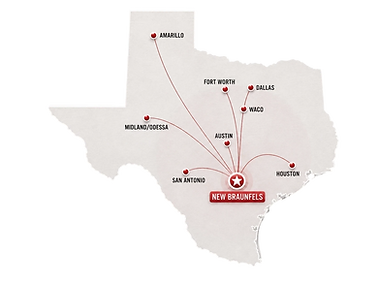
Texas Based. Nationwide Training.
R. Ryan Rider, Ph.D.
3D Forensic Technology Instructor | Crash Reconstructionist
With more than 30 years of law enforcement, investigative, and forensic experience, Dr. Rider provides practical 3D laser scanner training grounded in real crime scene, crash reconstruction, and forensic documentation workflows.
30+ Years of Law Enforcement and Investigative Experience
Crash investigation and reconstruction experience
FARO Scanner & Scene Instructor
TCOLE Certified Instructor
Ph.D. in Criminal Justice
Extensive 3D Forensic Technology Experience

Frequently Asked Questions
What is 3D laser scanner training for law enforcement?
3D laser scanner training teaches law enforcement and forensic personnel how to use terrestrial laser scanning to document crime scenes, crash scenes, fire scenes, and other complex environments. Training can include scene planning, scanner setup, field data capture, registration, point cloud processing, measurement, quality assurance, and the use of 3D data for investigative analysis and presentation. The goal is not simply to teach scanner operation. Investigators should also understand how to determine what needs to be documented, how to capture the scene systematically, and how to evaluate whether the resulting data accurately represents the conditions being analyzed.
Can you train our agency using our existing scanner?
Yes. TRI can provide agency specific training using your existing FARO scanner, software, equipment, and established workflows. This allows personnel to learn with the same technology they will use during actual investigations. Training can also be customized around your agency's experience level, investigative responsibilities, available equipment, and operational goals. Agencies implementing a new scanning program can begin with foundational instruction, while experienced teams can focus on advanced acquisition, processing, analysis, and forensic workflow integration.
Is 3D scanning useful for both crime scenes and crash investigations?
Yes. 3D laser scanning can support both crime scene investigation and crash reconstruction by preserving detailed spatial information about the scene. For crime scenes, scanning may document room geometry, evidence locations, structural relationships, trajectories, large outdoor environments, and complex scenes. For crash investigations, scanning may preserve roadway geometry, vehicle positions, debris fields, tire evidence, grades, elevations, sight distance, impact areas, and vehicle damage. The scanner records geometry and spatial relationships. Investigators must still determine what evidence is relevant and how the collected data should be interpreted within the investigation.
Do investigators need prior 3D scanning experience?
No. Training can be designed for personnel with little or no previous laser scanning experience. Introductory instruction can begin with scanner setup, field terminology, scene planning, scan placement, data acquisition, and basic processing. More experienced users can progress into registration quality, point cloud management, measurement extraction, visualization, forensic mapping, and integration with reconstruction or analysis software. Training can be adjusted to match the experience level of the participating personnel.
Can training include point cloud processing and forensic visualization?
Yes. Training can extend beyond field scanning to include point cloud registration, processing, measurement, visualization, and the integration of 3D data into forensic documentation and reconstruction workflows. Depending on the agency's needs, instruction may address cleaning and reviewing point clouds, extracting measurements, creating orthographic views, preparing scene diagrams, evaluating spatial relationships, and developing visual material for reports, case review, or courtroom presentation. The specific workflow can be customized around the software and technology used by the agency.
Can 3D laser scanning data be used in court?
Yes. 3D laser scanning data can be used to support investigative reports, measurements, diagrams, forensic analysis, demonstrative exhibits, and courtroom testimony when the underlying methodology and data are properly documented and validated. The value of the technology depends on more than producing an impressive 3D image. Investigators should be able to explain how the scene was scanned, how the data was processed, how measurements were obtained, what quality assurance procedures were used, and how the resulting information relates to the opinions or conclusions being presented. Training therefore emphasizes defensible documentation practices in addition to scanner operation.
Does TRI provide on site agency training?
Yes. Triple R Investigations provides on site 3D laser scanner training for law enforcement, forensic, fire investigation, and crash reconstruction personnel. TRI is based in Texas and can provide training for agencies throughout Texas as well as travel nationally for agency specific instruction. On site training can be configured around the agency's FARO equipment, software, personnel, scene types, and operational objectives.

Build Your Agency's 3D Documentation Capability
Inquire about 3D Scanner Training
Whether your agency is implementing 3D scanning for the first time or expanding an existing forensic mapping program, TRI can develop training around your personnel, equipment, investigative responsibilities, and operational objectives.